Dogs with Big Feelings
Real-life training for reactive dogs, so their world doesn't have to keep getting smaller.
You've become surprisingly good at spotting another dog at 200 metres. You know exactly which streets to avoid, which houses have dogs behind the fence and how quickly you can execute an emergency U-turn when someone appears around the corner with an off-leash Labrador.
Going for a walk shouldn't require this much bloody strategy, but somehow your dog's reactivity has become something you plan your life around.
Dogs with Big Feelings is a 60-day training program to help you understand your dog, feel confident handling the messy bits and start enjoying more of life together again.
“We used to be confined to neighbourhood walks but now, she has a lot more freedom.”
“She’s a much happier dog and I’m a much happier person.”
Taylor & Pinto the Kelpie X
You've tried stuff, but you're still stuck.
You've taught the obedience, carried the treats, watched the videos, tried different equipment and followed advice that sounded like it should work. Some of it probably helped.
But when another dog appears, you're still bracing yourself for what happens next. You're still planning around the reactions, wondering whether you're doing the right thing and wishing you could just feel more confident about handling your own dog.
You don't want another trick to try. You want to feel like you've actually got this.
Most trainers start with the reaction.
I start with the life that's creating it.
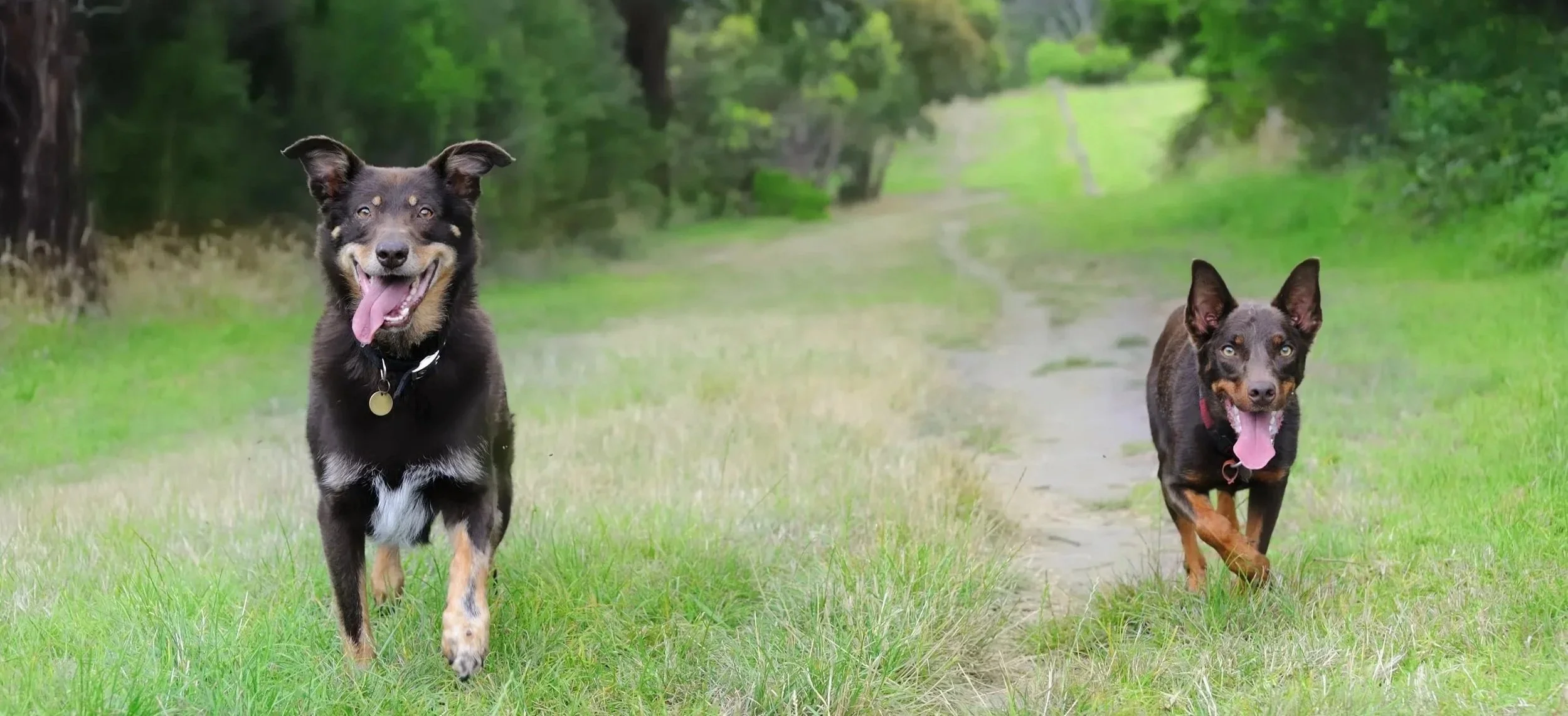
Living with a working dog is a bit like sharing a house with someone who's had three coffees and just been told to ‘just relax’.
Over eight weeks, we'll build the foundations that make the barking, lunging and general chaos less necessary in the first place. We'll improve communication, give all that drive somewhere useful to go, help your dog learn how to properly switch off and build practical skills that make everyday life easier.
A fulfilled dog with clear communication and sensible boundaries has far less reason to spend their day creating chaos.
Fast forward a couple of months...
You clip the lead on and head out without that familiar knot in your stomach. Your dog is still very much your dog, but when something catches their eye, you know what you're looking at and what to do next.
Another dog appears and you don't immediately brace for disaster. You can help your dog through it, keep moving and get on with your walk without feeling like you're making it up as you go.
And gradually, you start thinking less about what you need to avoid and more about what you could actually do together. New walking spots. Walks with friends. Adventures you wouldn't have considered a few months ago. Maybe even just a genuinely nice Tuesday morning walk.
You understand your dog. You trust yourself. And life together feels fun again.
60 days of support in real life
Dogs with Big Feelings gives you 60 days of coaching and support, with each session building on the last.
Between sessions, you'll practise in real life, send me videos when you're unsure, ask questions, celebrate the wins and troubleshoot the inevitable wobbles before they become bigger problems.
You'll have:
Four private one-on-one training sessions at your home.
Two small, supported group sessions to practise your new skills around other dogs.
Personalised homework and progress tracking.
Regular WhatsApp support and video feedback.
Access to my resource library and training guides.
Training equipment to help you get started.
Continued support after the active program finishes, plus opportunities to keep progressing through Adventure Club and other Dynamo Dogs services.
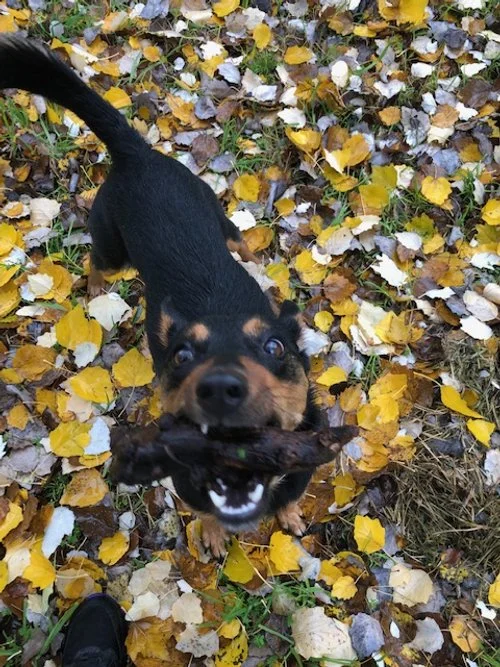
Then we take it out into the real world
Once the foundations are coming together, we'll take them into supported group sessions where you can practise around other dogs with me there to coach you.
It's your chance to use what you've learned in the situations where you actually need it.
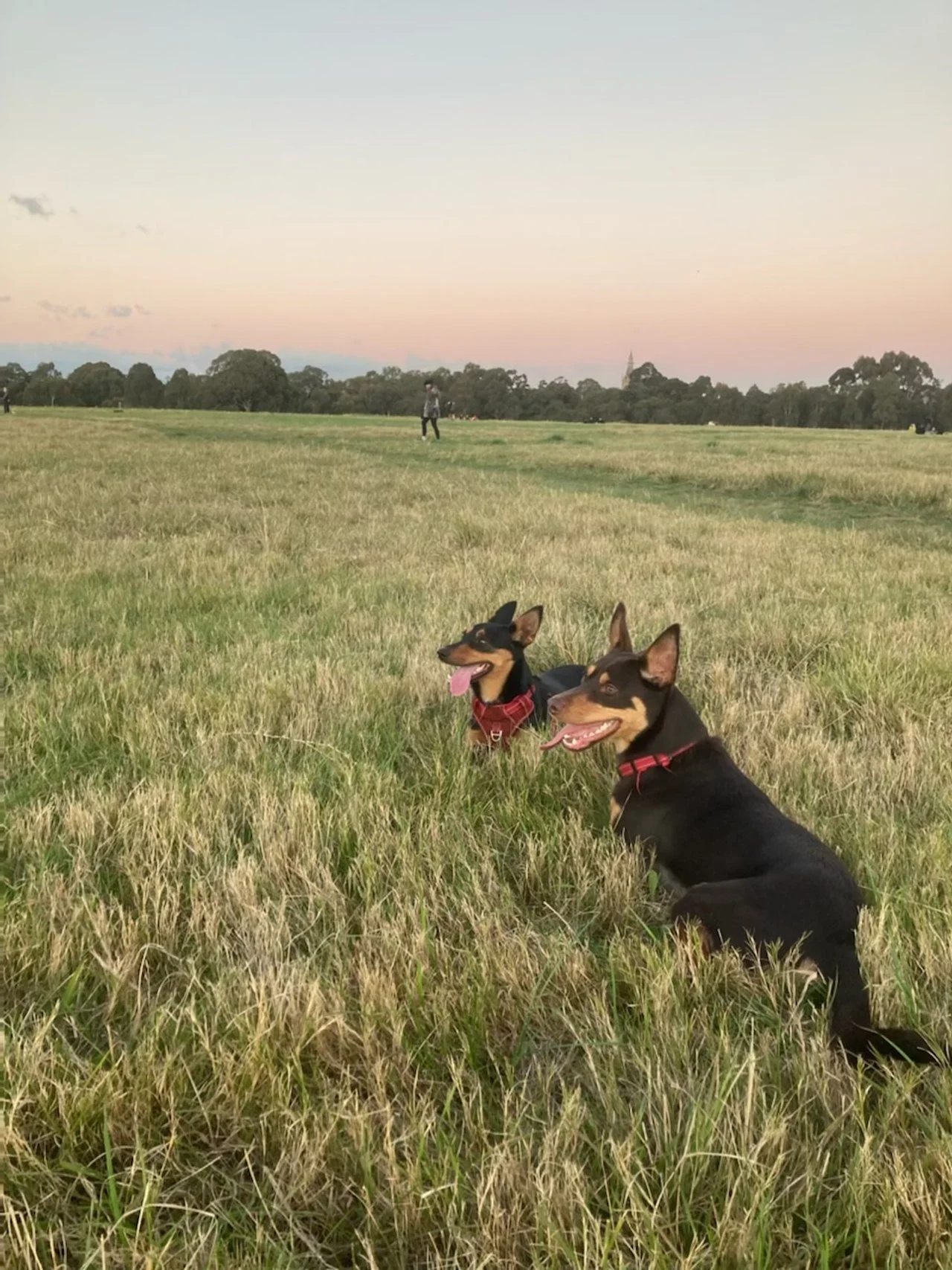
The bit that happens between the sessions
Most clients spend around 10–20 minutes a day intentionally working with their dog, and a lot of the learning happens during things you're already doing: walking, playing, making dinner or simply getting through everyday life together.
I'm not trying to cram more into your day. I want to make the time you're already spending with your dog easier and more enjoyable.
A little about me
If you've ever looked at your dog and thought, 'Mate... what on earth are we doing?', I've been there.
My kelpie Cricket was my dream dog. She was also an absolute chaos monkey: clever enough to outsmart me, driven enough to keep going all day and more than capable of making every walk feel like an adventure I hadn't signed up for.
For a long time, I thought the barking and lunging were the problem. What affected us far more was how small our world became while I tried to manage them. We avoided places, dodged other dogs and spent far more time managing life than enjoying it.
Learning to understand the dog underneath the behaviour changed everything, and that experience still shapes the way I train today.
I'm now a qualified dog trainer, Family Dog Mediator and Mantrailing Global instructor, specialising in reactive dogs and the people who love them. My job is to help you understand each other better and build the kind of life you probably imagined when you brought your dog home in the first place.
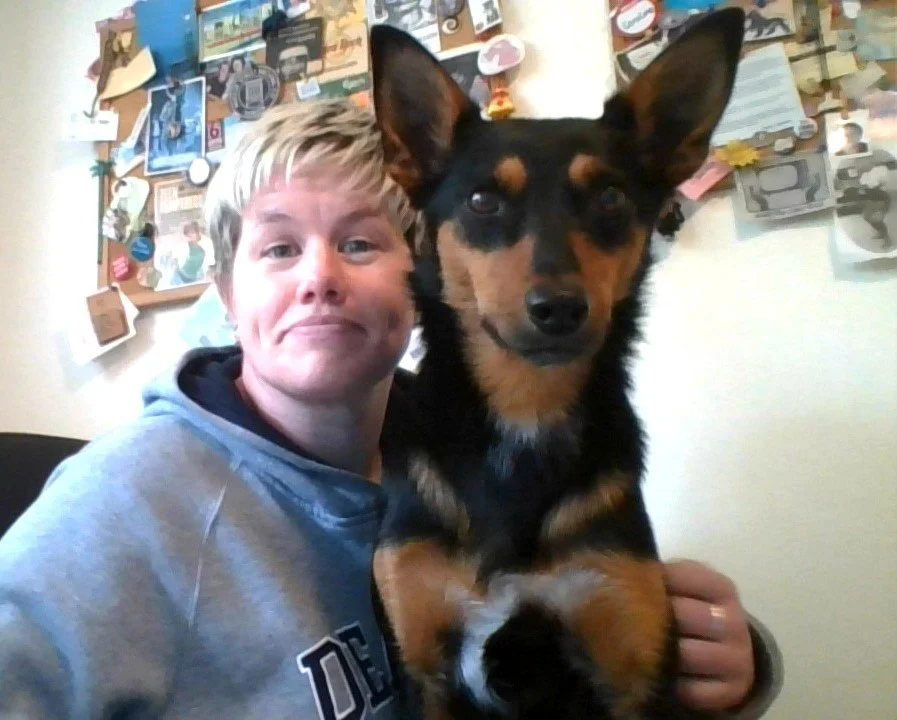
Yep. That’s me and Cricket, the dog that started it allWe might be a good fit if...
Life with your dog has become more about managing reactions than actually enjoying things together.
Having one clear plan sounds much better than collecting another round of conflicting advice.
Understanding why your dog behaves this way matters to you, alongside actually changing the behaviour.
Play, purpose, freedom and sensible boundaries all have a place in the kind of relationship you want with your dog.
Regular practice between sessions feels realistic, especially with support when things get messy.
Ultimately, you want to feel confident with your dog and get back to doing more together.
...and we might not be if
You're looking for someone to 'fix' your dog without much involvement from you.
A perfectly obedient dog is the goal, rather than practical skills that make everyday life easier.
There's no time or capacity for regular practice between sessions right now.
You're uncomfortable with an individual approach to training that can include food, play, boundaries and training tools depending on the dog.
Your dog's behaviour involves risks or needs that would be better supported by another professional.
The investment
The full Dogs with Big Feelings program is $3,595, and flexible payment plans are available. If we decide it's the right fit, I'll explain all of your payment options before you commit to anything.
And if I don't think your dog needs the full program, I'll tell you that too.
“It’s been so worth every single cent, the way I’m enjoying my life now. Stop waiting, stop overthinking and wasting time, just do it.”
Tania & Nanuk the Samoyed
What you can expect from me
You can expect honest advice, practical coaching and support that fits the dog in front of me. I'll guide you, celebrate the wins, help you through the inevitable wobbles and answer your questions along the way.
In return, I ask you to show up, practise between sessions and tell me when you're unsure or something isn't working. If you're doing that and still aren't seeing the progress we've agreed to work towards, I'll honour my written program guarantee and keep helping you.
The people who've lived it say it best
Every dog is different, but there's one thing these families all have in common: they were once exactly where you are now.
Still wondering something?
-
That's exactly what the kick-off session is for.
We'll chat about what's been going on, what you've already tried, what life currently looks like and what you'd love it to look like instead.
If I genuinely think Dogs with Big Feelings is the right fit, I'll tell you.
If I think you'd be better served by something else, I'll tell you that too.
I'd much rather point you in the right direction than sell you something you don't need.
I will tell you honestly if I think another option would suit you better.
-
Because knowing what to do and being able to do it when real life gets messy are two different things.
A training session can teach you a skill. The 60-day program gives us time to practise it, see how your dog responds, adjust what isn't working and build on it as things change. You also have support between sessions, so you're not left wondering whether you're doing it right or waiting weeks to ask about something that happened on Tuesday.
For reactive dogs, that's usually where the real progress happens.
-
Probably.
Many of the dogs I work with already know plenty of obedience. They can sit, drop, stay and look at their owner beautifully... right up until another dog appears.
My focus isn't on teaching more commands.
It's helping you understand why your dog behaves the way they do, improving communication, giving them more appropriate outlets and helping both of you make better decisions in everyday life.
-
Less than most people expect.
I usually ask clients to aim for around 10–20 minutes of intentional practice each day.
Some days that might be a quick play session, practising a communication skill or working on helping your dog settle.
The goal isn't to give you another full-time job.
It's to help you make better use of the time you're already spending with your dog.
-
Not at all.
Nobody gets thrown in at the deep end.
The group sessions happen later in the program, they're deliberately small and we only attend when your dog is ready.
Sometimes that means working at a distance. Sometimes it means simply watching. That's perfectly okay.
There's no prize for rushing.
-
In fact, that's one of the biggest reasons people come to me.
Living with a reactive dog can knock your confidence around more than most people realise.
We'll build your skills one step at a time so you know what you're looking at, what your options are and how to respond.
Confidence usually follows competence.
-
Absolutely.
Most people choose the payment plan because it spreads the investment out while still allowing us to get started straight away.
We'll go through all the options before you commit to anything.
-
Hopefully...
You start enjoying your dog a whole lot more.
Some people finish the program and happily head off on their own.
Others stick around through Adventure Club, mantrailing or off-leash training because they've realised how much fun life with their dog can actually be.
There's no pressure either way.
My goal isn't to keep you in training forever.
It's to help you build a life where you don't need me nearly as much.
-
Life happens.
I just ask for at least 24 hours' notice wherever possible.
The program runs over 60 days, so there's usually enough flexibility to shuffle things around if something unexpected pops up.
The only thing I don't want is lots of big gaps between sessions, because consistency is one of the biggest drivers of progress.
-
Maybe.
It depends on the circumstances.
Some bite cases are suitable for Dogs with Big Feelings, while others need a different level of management or support.
The best thing to do is tell me about it during your kick-off session and we'll work out the safest and most appropriate path forward together.
-
Not as part of Dogs with Big Feelings.
This program focuses on communication, play, fulfilment, boundaries, handling skills and helping your dog make better choices.
If reliable off-leash recall becomes a goal later on, I have a separate recall program for suitable dogs and owners.
Not sure what kind of help your dog needs?
You don't need to have everything figured out before you get in touch. You just need to be ready for something to change.
Tell me what's going on with your dog, what you've already tried and what you'd really like life together to look like.
I'll read through it and point you towards the next step that makes the most sense, whether that's Dogs with Big Feelings, Adventure Club or something else. And if I think there's a better option for you, I'll tell you that too.